1. Individual, Grab-and-Go Portions Are Now the Default
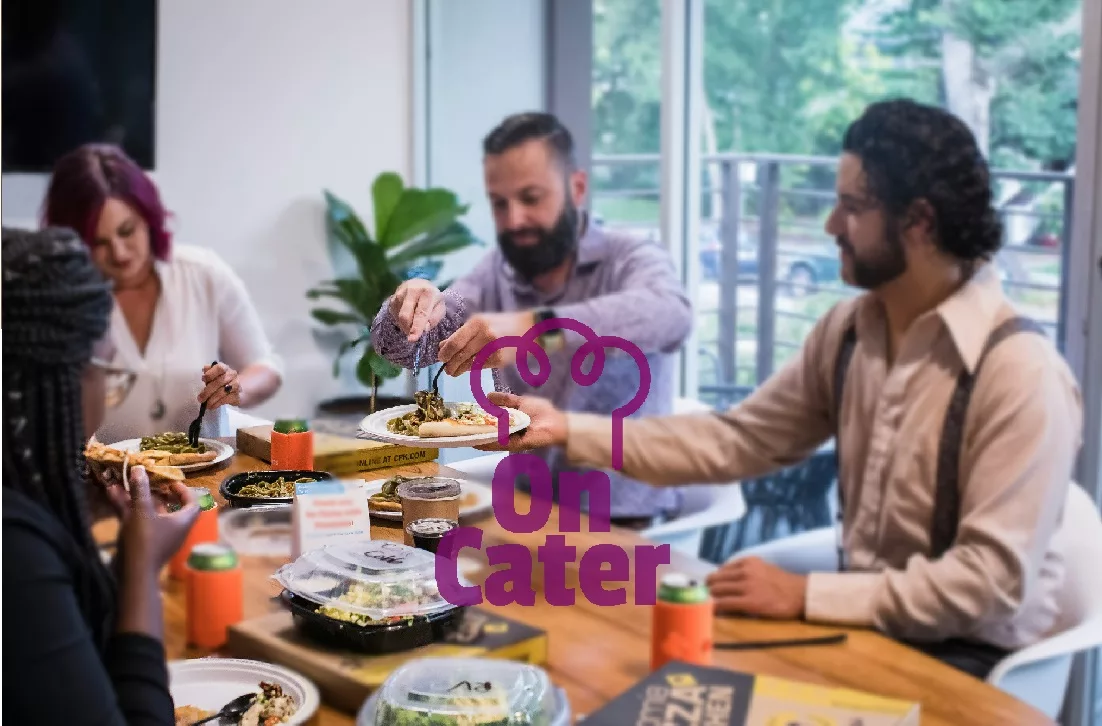
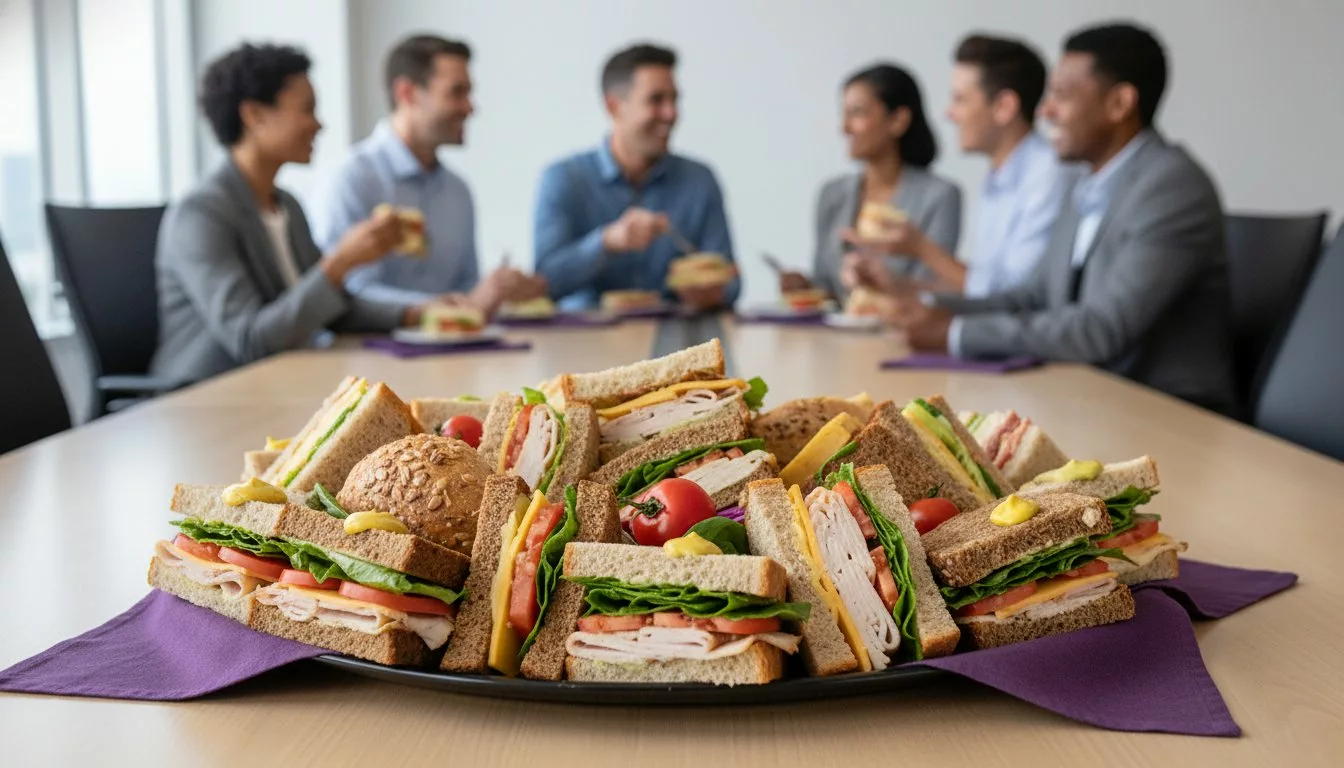
Shared platters used to be the standard for office lunches. Not anymore. Individually packaged meals — a habit that started during the pandemic — have stuck around because they’re simply easier: no serving lines, no guessing about portion sizes, and no shared utensils touching everyone’s food. For hybrid offices across DC and NoVA, where headcount on any given day can be unpredictable, individually boxed meals also make it far easier to order the right amount without waste.
2. Wellness-Forward Menus
Corporate clients are asking more specific questions about what’s on the plate: calorie counts, protein content, allergen labeling, and genuinely plant-forward options (not just a token salad). Macro-conscious, high-protein bowls and clearly labeled allergen-free stations are becoming a baseline expectation rather than a special request, especially from health-focused employers and government-adjacent offices in the area.
3. Interactive Stations for Larger Events
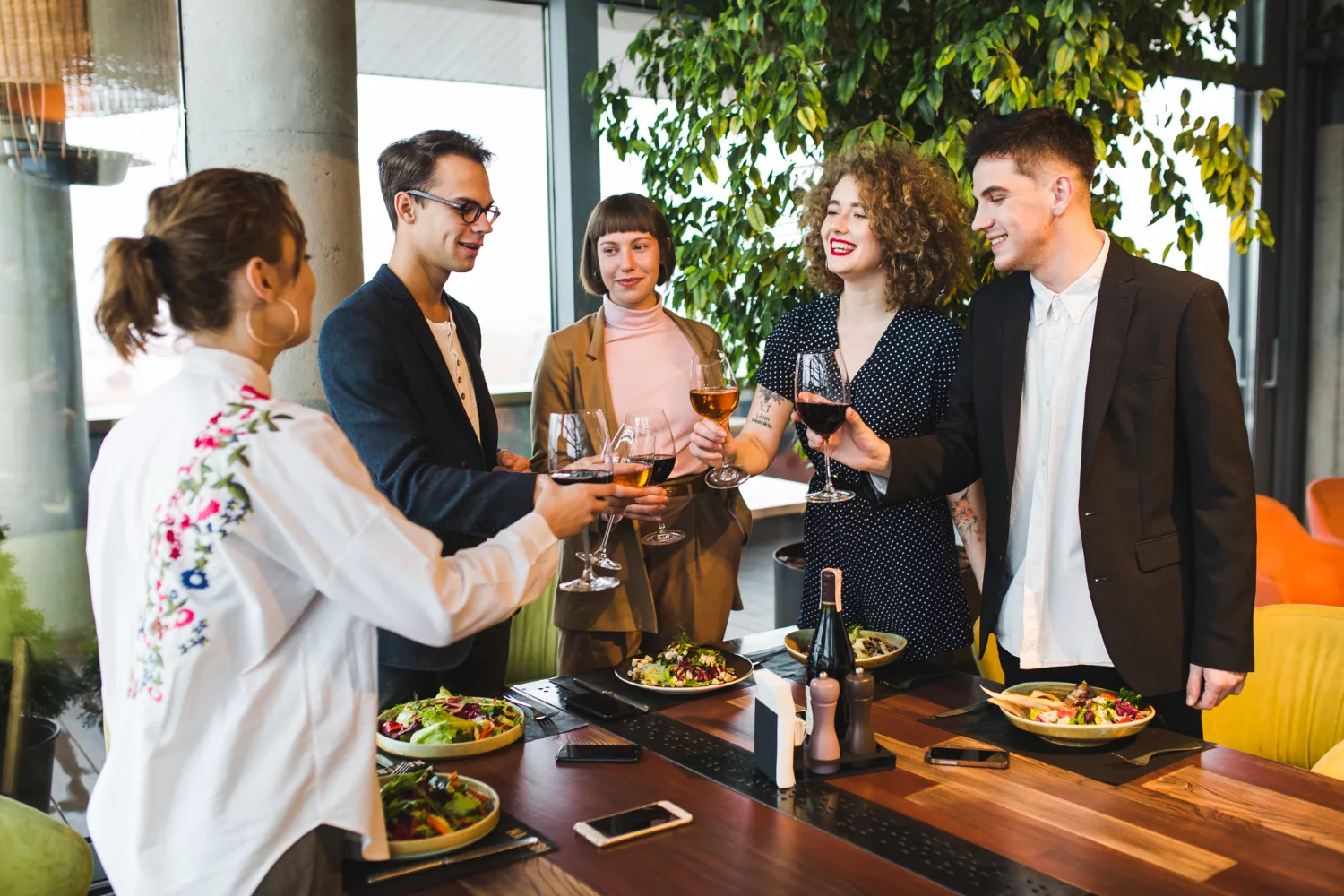
For bigger gatherings — client appreciation events, holiday parties, all-hands meetings — build-your-own bowl bars, taco and slider stations, and live pasta stations are replacing static buffets. They give guests something to do besides stand in line, and they tend to photograph well, which matters for internal comms and social recaps. Grazing tables and craft mocktail/cocktail bars are showing up more often too, driven by demand for lower-alcohol and alcohol-free options at daytime and after-work events alike.
4. Diverse, Globally Inspired Menus
DC and Northern Virginia are some of the most diverse metro areas in the country, and office menus are finally catching up. Mediterranean, Latin American, Middle Eastern, and Southeast Asian menus are being requested as often as the classic sandwich platter — not as a novelty, but as a genuine reflection of the teams being fed.
5. Transparent, All-In Pricing
Surprise delivery fees and unclear service charges are a fast way to lose a repeat corporate client. Companies booking recurring catering — weekly team lunches, standing client meetings — want one clear per-person rate that includes delivery and setup, so finance and office managers can budget without back-and-forth.
6. Micro-Catering for Smaller Teams
Not every order is for 200 people. With more distributed and hybrid teams, there’s growing demand for reliable, well-priced catering for 10-25 person meetings — a segment that many larger catering operations aren’t built to serve efficiently, but that makes up a large share of the day-to-day ordering happening across DC-area offices.
What This Means If You’re Ordering Catering in DC or NoVA
The throughline across all of these trends is the same: corporate teams want catering that’s easy to order, transparent on price, flexible on portion size, and reflective of the people actually eating it. That’s exactly the gap OnCater was built to close — connecting DC and Northern Virginia offices with local restaurants and caterers who can deliver individually portioned, allergen-labeled, globally diverse menus at clear, all-in pricing, whether you’re feeding 12 people or 200.
If your office is planning catering for an upcoming meeting, client event, or holiday party, browse local caterers on OnCater to see what’s available in your neighborhood.